My maternal grandmother’s life can be told in two disparate stories: one based on my childhood memories of her, the other discovered only after she died when an old letter revealed a painful past she kept hidden from her family. Uncovering Grandma’s secret threw new light on my childhood memories and gave me a new appreciation of her life.
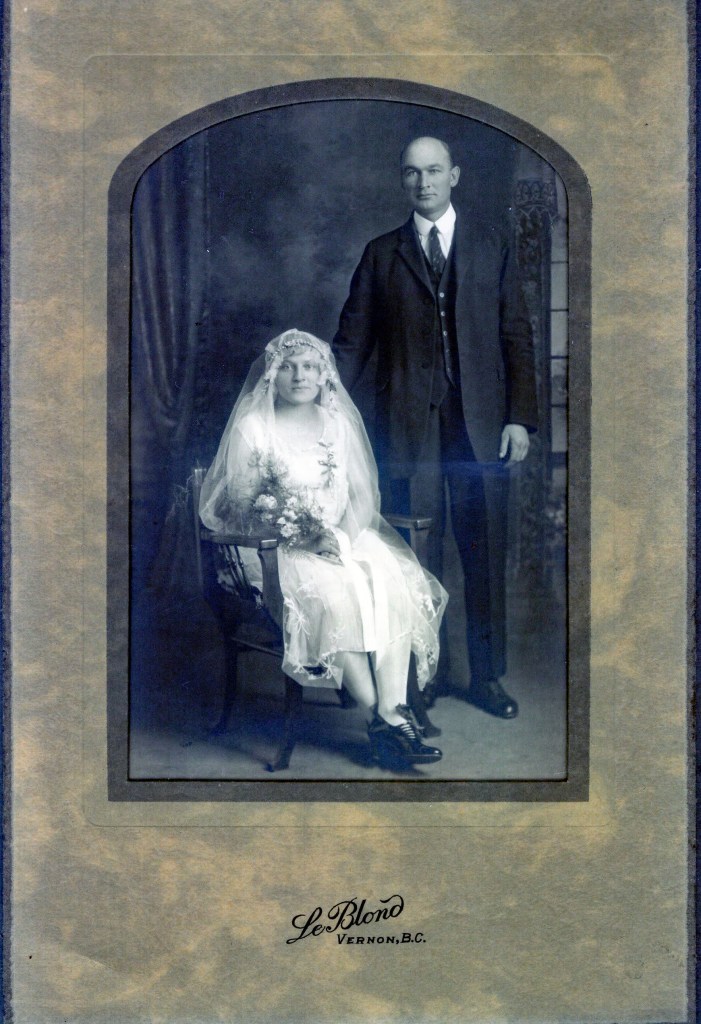
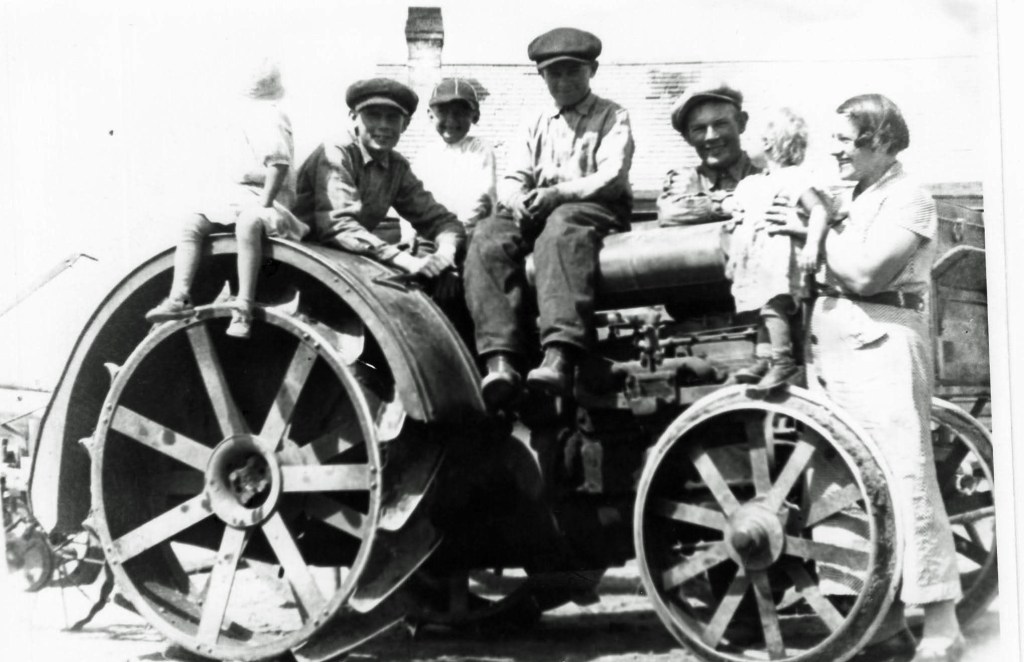
My grandmother’s name is Magdalena Milanowich, but her friends called her Maggy. She was born in Koconicki, Poland, in 1905, immigrated to Canada in 1928, and later married my German grandfather, John Rosenau. They farmed and raised their large family on the prairie grasslands near Chinook, Alberta. Grandpa passed away when Mom was only twelve, and eventually, Grandma moved to Cereal.
I loved visiting Grandma in Cereal. It was a busy rural village with a school, granaries, post office, and many small businesses serving local farming families. Grandma lived in a tiny house that she kept extremely tidy, and decorated with house plants, pictures of her grandchildren, and a portrait of Jesus. Along the sidewalk, a hedge of caragana bushes grew, one of the few trees that could survive the hot dry summers on the prairie. At the back, Grandma raised a sizeable garden, where she grew everything including carrots, potatoes, beets, cabbages, dill, and sunflowers. Whenever we visited, Grandma always gave me twenty-five cents to walk to the grocery store on Main Street to buy a bottle of soda pop and a chocolate bar.
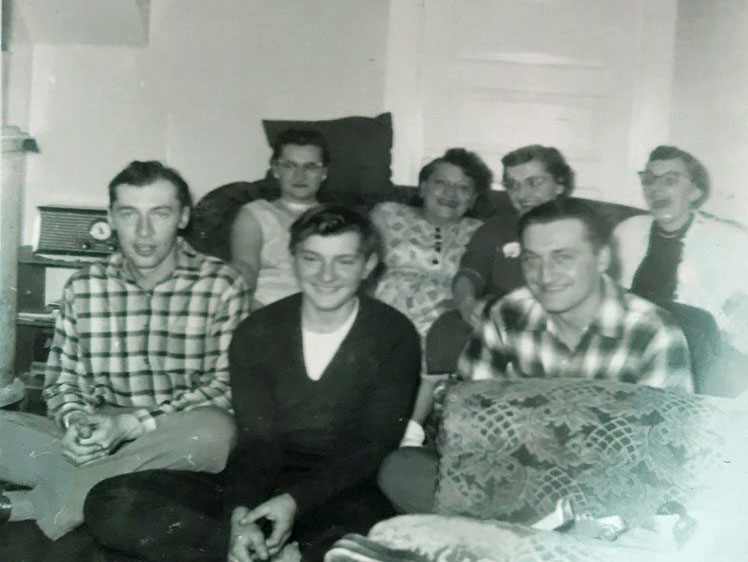
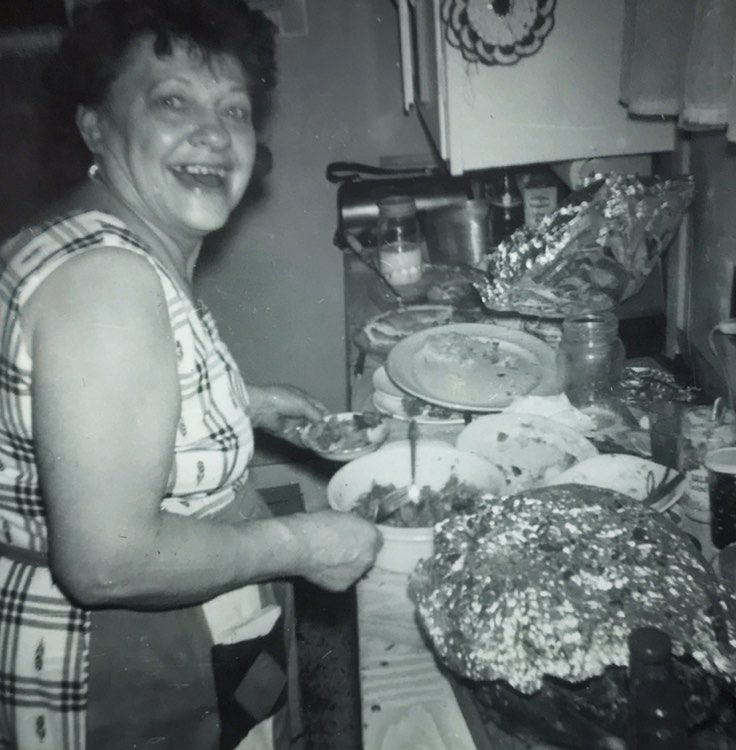
Grandma had a loud, joyful laugh and a thick Polish accent. She enjoyed giving hugs and kisses, which I hated, only because I hated hugs and kisses from anyone at my age. She also enjoyed cooking and she taught me how to pinch the dough around the potato filling when making perogies. I thought that Grandma ate weird food. I still remember seeing her nibbling chicken feet from her soup, and me refusing to have a bowl. However, I loved eating her homemade borscht, with fresh vegetables from her garden and a big dollop of sour cream.
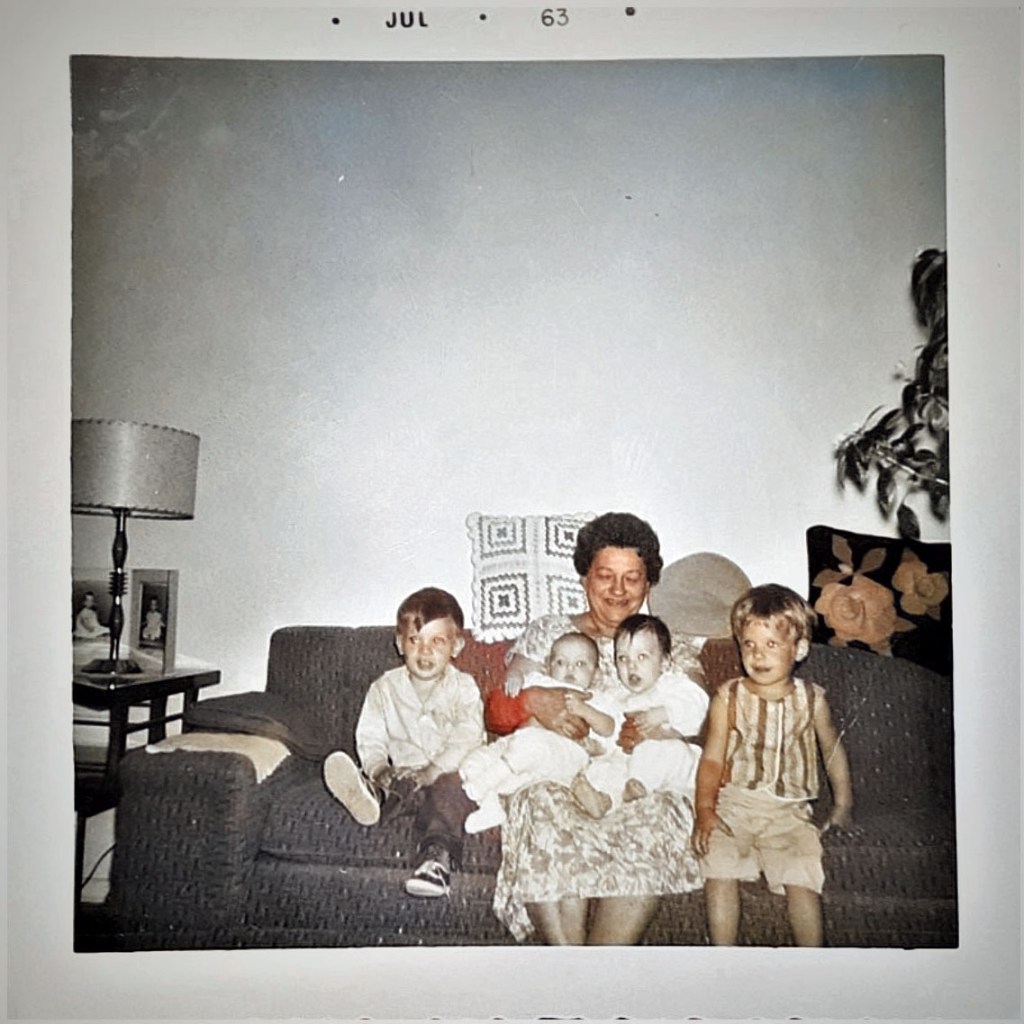
Christmas and Easter family celebrations were Grandma’s favorite times of the year. At Easter, I looked forward to coloring Easter eggs and searching for chocolate treats hidden by the Easter Bunny. There was always an enormous meal, and everyone ate too much and laughed a lot, aided by the adults having a drink or two.
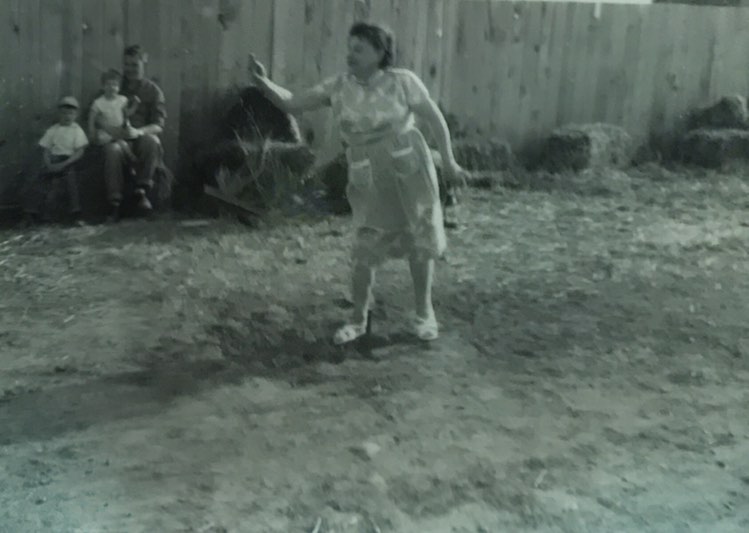
During the summer, I enjoyed the family reunions organized by my uncles and aunts. Since Grandma had six married children and twenty-two grandchildren, it was a big occasion if everyone could attend. Besides visiting with my uncles, aunts, and cousins around the campfire, the highlight of the reunion was the horseshoe tournament.
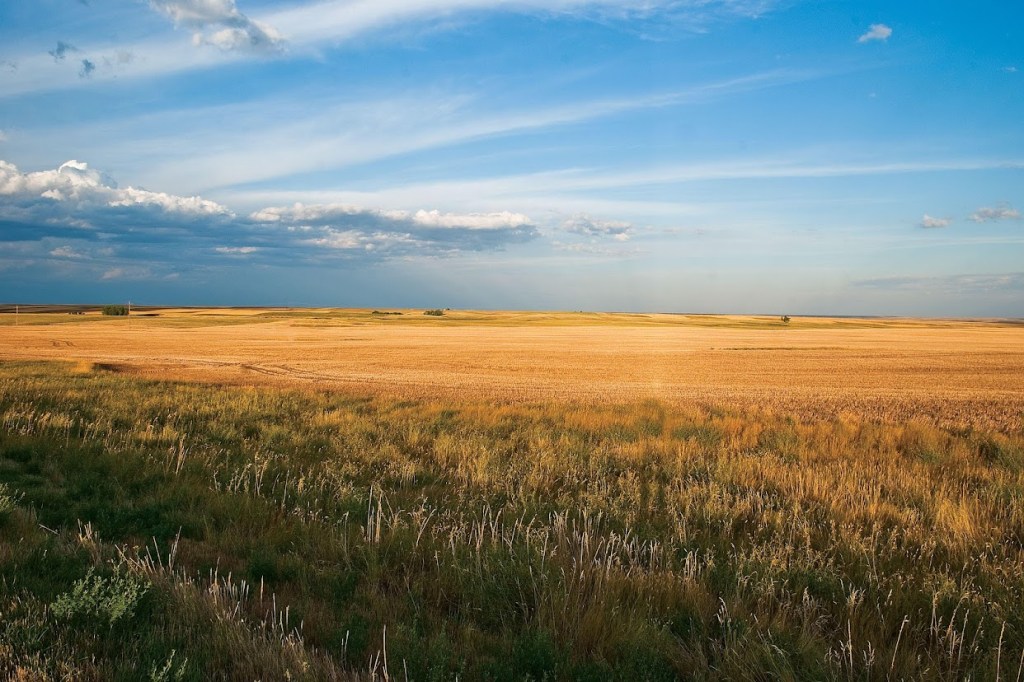
I was twenty-three years old when Grandma passed away. I remember watching Mom receive the phone call telling her that Grandma had died and her sobbing on Dad’s shoulder. It upset me as well and I had an empty sick feeling at the bottom of my stomach. They laid Grandma to rest next to my grandfather, overlooking the vast prairie landscape with its blue sky and the golden wheat fields they farmed when raising their family.
Six years later, when I was researching my family tree, Mom gave me an old letter that had been sent to Grandma. The letter changed everything I knew about Grandma. I could tell from the envelope it was sent from the Soviet Union over fifty years ago; however, I couldn’t read the letter because it was written in an unfamiliar language, which I assumed was Polish.
It turns out the letter was written in Ukrainian, and to my surprise, it was from Grandma’s sister Olena. No one knew Grandma was Ukrainian, nor that she had a sister. Upon reflection, Mom said that Grandma had talked very little about her life before she immigrated to Canada.
Recently, a relative found my grandmother’s immigration papers. Grandma listed her race as Ukrainian and spelled her name, Magdalena Milanowicz. The documents stated that she sailed alone on the Andonia out of Liverpool and landed in Quebec City. The document confirmed Grandma was born in Kockoniki, Poland, but the spelling was Konkolniki, which explains why I could never find its location in Poland when researching my family.
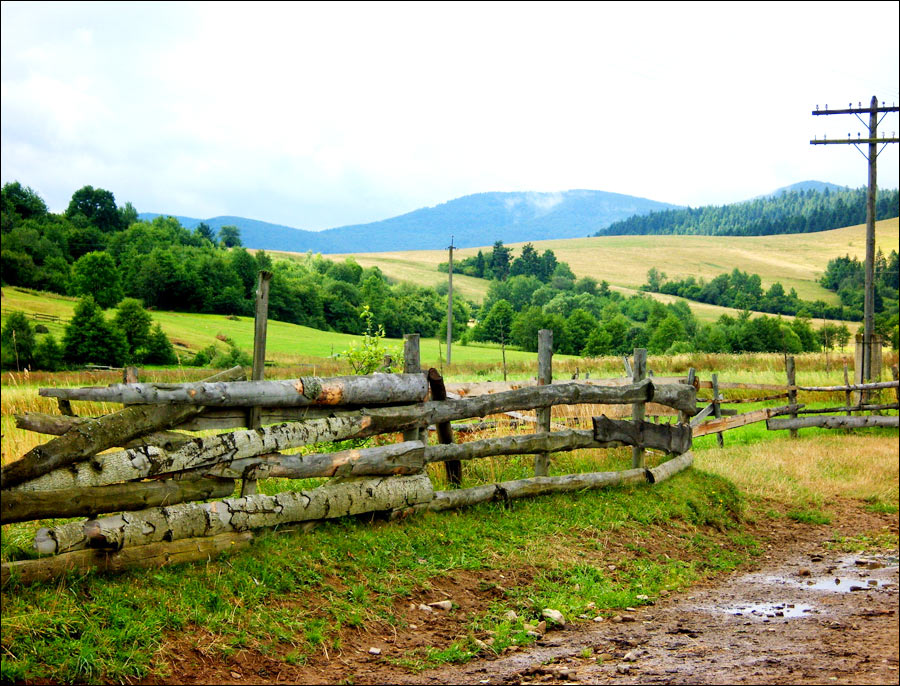
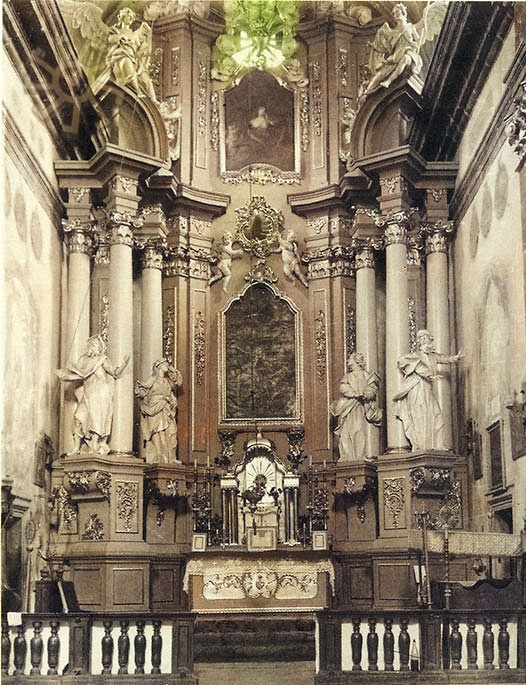
With Google’s help, I found Konkolniki. It’s now in the western part of Ukraine because Poland’s borders changed after World War II. It is a small rural farming village surrounded by lush green forests, and near the Bystrytsia River and the Carpathian Mountains. Konkolniki once had a beautiful baroque Roman Catholic church called St. Mary Magdalene. There can’t be any doubt this is where Grandma was baptized. The church is now in ruins because Soviet Union authorities closed the parish and later used the church to store chemicals.
It made me sad to think that Grandma saved this letter, her only possession reminding her of her family in Ukraine. Grandma couldn’t read or write, so someone must have read the letter to her, and since there is only one letter, I don’t think she wrote back. I wish I knew why she kept her Ukrainian heritage and her sister a secret. Perhaps talking about Ukraine brought back horrific memories of World War I and the Ukrainian Civil War. Maybe she felt starting a new life in Canada meant forgetting her life in Ukraine, and that meant forgetting about her family. I think her inability to read or write caused her to lose contact with her family, and for that reason, kept the sadness and pain of missing her homeland and family to herself.
I admire Grandma’s courage as a young woman, traveling alone to a foreign country, leaving friends and family behind, to begin a new chapter in her life. Grandma was fortunate to immigrate to Canada before Ukraine became part of the Soviet Union. In 1932, Joseph Stalin starved 3.9 million Ukrainians for punishment when peasant farmers resisted giving up their land and livelihood. Because of Grandma’s courage, her Canadian family has never known war, experienced poverty, or starvation. I wish Grandma were alive because I would gladly let her give me a big hug and kiss, and I’d give her one as well. I might even try eating chicken’s feet.

 One Last Kick
Hey Dean, interesting tale. Olive eats chicken feet, as do most Philippinos. Disgusting, and a lot of work for almost zero nutrition. I used to get 25cents for allowance too, every Saturday when I went to music lessons in Sexsmith, where I would spend it at the pool hall on a pop and a comic book. Cheers, Bruce
LikeLike