The sporting world has witnessed many historic athletic performances this past century: recently Usain Bolt ran one hundred meters in 9.58 seconds, Eliud Kipchoge ran a marathon in under two hours, and the legendary Norwegian cross-country skier Bjorn Daehlie won his eighth Olympic Gold medal by finishing a fifty kilometer race in a time of 2 hours and 5 minutes. Older historic athletic performances, which are now routinely surpassed by today’s athletes, include Roger Bannister’s four-minute mile and Nadia Comăneci’s perfect score in gymnastics However, an athletic performance the sporting world hasn’t yet witnessed is me breaking the three-hour barrier for the thirty-one kilometer Birkenbeiner.
Last year I finished the Birkie with a time of 3:05:06 hours, and despite accomplishing a personal best, I was disappointed that I didn’t break the three-hour barrier. To finish five minutes short after months of intensive training and pushing my body to its physical limit made me think I was too old to break three hours. Driving home from the race, I contemplated retiring from skiing the Birkenbeiner, but as my body recovered and I got over my disappointment, I began thinking of giving it another try.
Breaking the three-hour barrier would be a monumental challenge, so before I started training, I analyzed my race data from my Garmin watch to determine where I could make improvements. The data included my one-kilometer splits, heart rate, elevation change, and stride length during the race. When I completed my in-depth analysis, I confirmed my suspicions of what I must do to break the three-hour barrier: don’t slow down the last ten kilometers of the race.
I struggled, however, to imagine maintaining my pace for the entire thirty-one kilometers, but ultimately I concluded that I must overhaul every aspect of my training program, including my dryland training, weekly cross-country ski distances, equipment, and race strategy. I hoped changing these elements of my training program would add up to more than 5:06 minutes.
I began my dryland training as soon as the snow melted by biking two times a week and running once a week. Every week I increased the distance, and my training was going well, until disaster struck: I got infected with Covid. I was worried the virus would cause lung damage and affect my performance at the Birkenbiener; however, I didn’t let myself become discouraged. Other athletes have recovered from injuries and returned to stand on the Olympic podium. For example, Canada’s Silken Laumann underwent five surgeries after shattering her right leg ten weeks before the 1992 Barcelona Olympics and won a bronze medal in single sculls. In the end, I made a full recovery, but my dryland training suffered a serious setback.
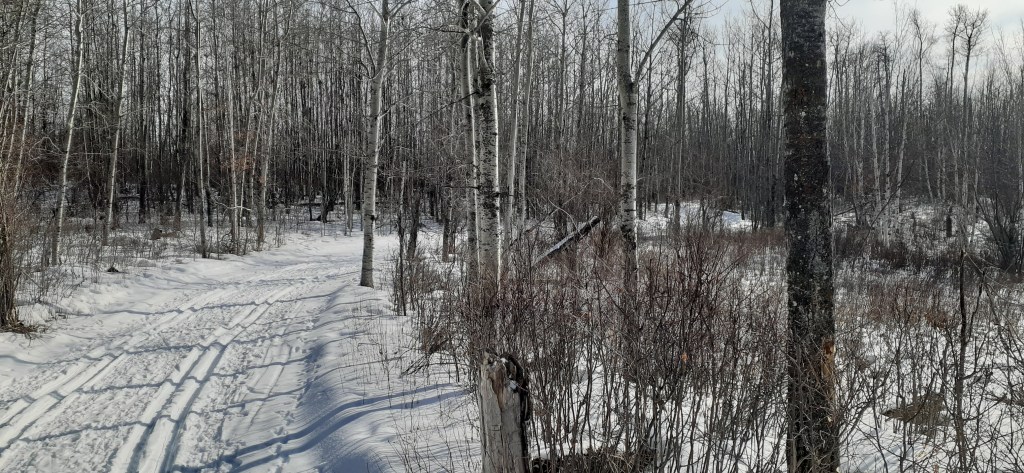
When the snow returned, my focus switched to increasing my cross-country skiing endurance. I ramped up the distance I skied each week, and as a result, I completed more long-distance workouts than previous years. But I knew I had to do more than increase my workload to achieve my goal. I needed to replace my dilapidated antique cross-country skis with new high-performance Nordic skin skis. Nordic skin skis are the latest technological advancement in cross-country skis that will grip every snow condition without having to wax your skis. That will give me an advantage over competitors that applied the wrong grip wax or need to reapply wax during the race if it wears off. It may seem like cheating, but Olympic athletes always use the latest technological advancements; for example, at the 2008 Beijing Olympics, American swimmer Michael Phelps wore the new LZR Racer swimsuit and broke seven world records.
Finally, my race strategy needed revising because of lessons I learned from last year’s Birkie, when I lost valuable time by falling three times during the race. The worst spill was at a water station when I embarrassingly fell in front of other competitors while drinking Gatorade. If I had stopped to hydrate and didn’t try passing competitors while drinking, I wouldn’t have stumbled. I was being too aggressive, and it cost me. My plan: be less aggressive so I don’t waste time digging myself out of a snowbank.
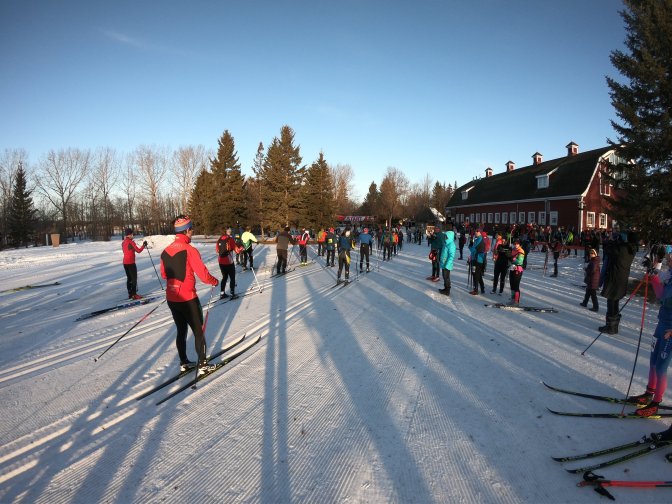
The morning of the race, I felt prepared. I seeded myself in the middle of the pack and didn’t let younger racers intimidate me with their youthful exuberance. Instead, I sized up some other grizzled Birkie veterans that would be my age group competitors. The race started well, but because of my competitive nature, I ignored my race strategy and fell three times in the first half, once when passing another skier, and twice while rounding a sharp corner. Each time I fell, I was determined to catch my competitors, remembering Norwegian cross-country skier Simen Hegstad, who crashed in the thirty-kilometer event at the 2018 Olympics and passed sixty-three skiers to win gold.

The last half of the course is hilly, which made my task difficult, but my new skin skis came through, as I could pass competitors who had stopped to reapply wax to their skis. While climbing the hills, my body screamed for oxygen, telling me to ski slower, but my watch screamed back that I had to keep my pace. On the descent, I gasped for oxygen and my heart felt it would explode out of my chest as I recovered to climb the next hill. I could see a bright light because of oxygen deprivation, so I asked God if I was going to die. No answer. Towards the end, I couldn’t keep my pace and willed my way over the last hills, and as I rounded the last corner, I heard my name being announced and fans cheering. I crossed the finish line, exhausted, and fell to one knee. The race officials checked to make sure I was okay, and I told them I needed help standing back up because of a cramp in my right hamstring—not quite the glorious finish I had envisioned. Once I was back on my feet, I checked my time: 2:54:37 hours! I did it!
When I was young, I dreamed of competing in the Olympics and winning a gold medal. However, like my youth, that dream is over. But that doesn’t mean I have to stop competing or having new dreams. So, since I used to dream of scoring the winning goal in overtime to win the Stanley Cup, I think it’s time I lace up the skates and play Old Timer’s hockey and see if I can still put the puck in the net.

 One Last Kick