I can divide our European family adventure into two parts: touring the destination and traveling to the destination. Visiting new destinations was always thrilling; getting there, however, was a different story. Traveling could be exhausting, stressful, boring, and sometimes even pleasurable. Our family had already experienced a marathon journey traveling from Edmonton to London, and now, after visiting London, we had thousands of more kilometers to travel on our European journey, from London to Florence to Amsterdam, with stops in Paris, Barcelona, Venice, and Munich.
It was a lot of driving, and Michelle and I drove every single kilometer, with the exception of a train ride to Rome and a ferry across the English Channel. We spent hours together as a family, and our rented 2003 Peugeot van came to feel like a home. Michelle and I sat up front, with Keegan and Joel in the middle seats, and Brett in the back seat. We didn’t have electronic devices to play music or games, but that was not a problem because everyone enjoyed reading to pass the time. Sometimes, we would take a break from reading and just gaze out the window at scenic European landscapes passing before our eyes.

On long trips, Michelle tried to get us to sing rounds like Row Row Row Your Boat to keep everyone entertained, but the boys and I were not enthusiastic singers. Instead, for our musical pleasure, we listened to CDs on the van’s stereo system. Michelle and I must have listened to The Arrogant Worms at least a hundred times and I still have the lyrics “give peas a chance” playing in my mind from their blockbuster hit Carrot Juice is Murder.
Since we had landed in London, the first country where we had to drive ourselves was England. Our original plan was to pick up our rented van and then tour some English tourist destinations including Bath and a stop at Stonehenge. We would then drive to Dover to catch a ferry across the English Channel to France. However, when Michelle and I started thinking about the difficulty of driving on the road’s left side, with a vehicle’s steering also on the left-hand side, we changed our plans. I don’t understand why England is so different than the rest of Europe where we would be doing most of our traveling. It didn’t help English highways are insanely busy and I am slightly dyslexic. I envisioned turning the wrong direction at an intersection and colliding head-on with another vehicle. As a result, to avoid becoming a traffic fatality, our plan changed to driving directly to Dover.
On the morning of our trip to Dover, we rode the Tube to Heathrow Airport to pick up our van. I went to complete the paperwork and Michelle took the boys to a convenience store to buy lunch. Michelle wandered the store aisles for a long time because it was difficult finding enough food at a reasonable price to feed three growing boys in London, and a convenience store at an airport was not a place to find a bargain. Because Michelle was taking so long shopping, a store clerk became suspicious and began following her. Michelle expected he would accuse her of shoplifting; instead, he pointed at her and said her shoelaces were untied. It was a peculiar comment that left everyone perplexed and one that Michelle and Joel still joke about.
With the keys to the van in hand, lunch finally purchased, and luggage packed, we were ready to drive to Dover. The route involved traveling 160 km down the four-lane M20 and M25 highways. Dover is not only the location of the closest ferry terminal to London, it’s also the location of the Chunnel. The Chunnel is a 50 km railroad tunnel underneath the English Channel that carries vehicles between England and France. It’s faster crossing the channel using the Chunnel but is more expensive and not very scenic. We decided to take the ferry, both to save money, and to see the famous White Cliffs of Dover from the deck of the ferry as we sailed towards Calais.

Everyone was nervous about our drive to Dover. GPS did not exist then, so Michelle and I studied the map before leaving the parkade. We agreed that if I became confused, the best solution to avoid an accident was to follow the vehicle ahead of us, even if it met going off course. As we left, Michelle had her eyes fixed on the road, and our three sons sat quietly, watching. I felt like a beginner driver, having to drive during rush hour without first learning to drive on residential streets.
It felt unnatural driving in the left lane. When I looked straight ahead, instead of seeing oncoming vehicles, I saw the ditch. Intersections were also confusing. Instinctually, I thought left-hand turns were dangerous, not right-hand turns; that meant I would take the brunt of a T-Bone collision by making a risky right turn. Merging was also the opposite. I had to shoulder check over my right shoulder and then turn right to merge into the left lane, rather than shoulder check over my left shoulder and then turn left to merge into the right lane.
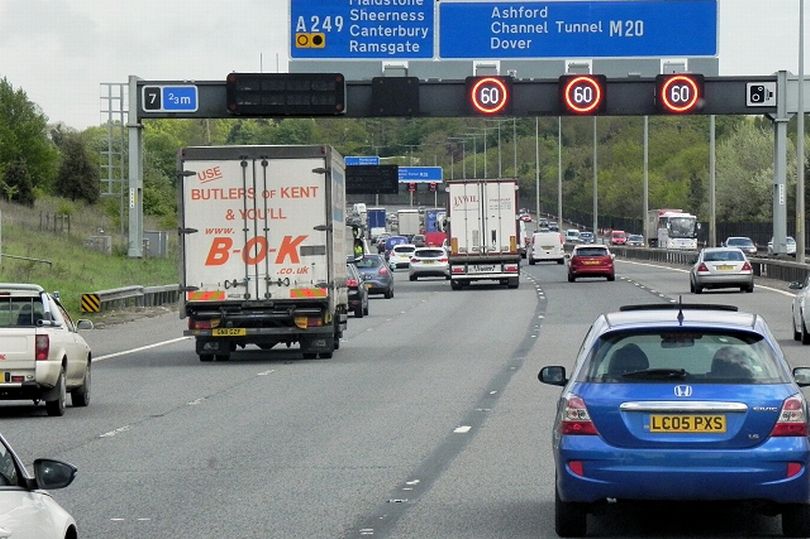
However, once I merged onto the M25 highway, the driving was easier. I stayed in the slow lane with the transport trucks the entire 160 km, not wanting to risk a lane change. I didn’t care if I was driving slowly and sandwiched between two trucks, as long as I made it to Dover safely. It was such a relief when we finally arrived. In the future, Michelle and I have decided if we visit England again, we will let someone else do the driving.

After loading our van onto the ferry, we immediately headed to the deck to view the White Cliffs of Dover. The cliffs are beautiful, rising over 100 m above the English Channel. They are an important national symbol of England, representing being home and being safe because soldiers landed there after being rescued from Dunkirk.
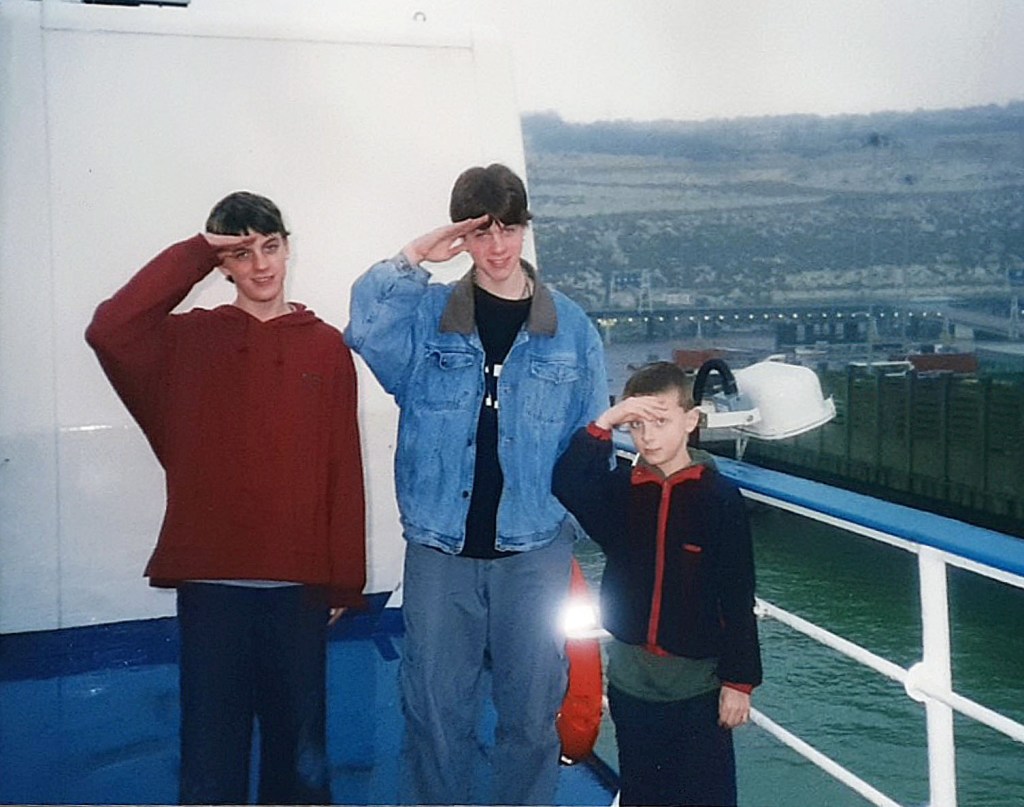
We ate our lunch and watched the cliffs slowly disappear, and the shoreline of France come into view. The next part of our journey was about to begin and I was relieved to know that whatever the destination, I’d be able to drive on the road’s right side.

 One Last Kick
One thought on “Our European Adventure: I’ll Never Drive in England Again”