Michelle and I have camped many times, but the trip we will remember the most was our first canoe camping trip. Our friends Dave and Leslie had introduced us to canoeing the previous year when we joined them for several day trips on the Red Deer River, so when they invited us to go on a four-day canoe trip on a system of lakes in Northern Saskatchewan we were excited to try it. It turned out to be our most adventurous wilderness experience ever.
The trip was more difficult than we anticipated. We had to canoe all day, portage, prepare meals, collect firewood, set up, and take down camp. We also had to do without luxuries like a soft mattress, hot water, toilets, and the internet, and to top it off, there are insects that sting or bite and unfavourable weather.
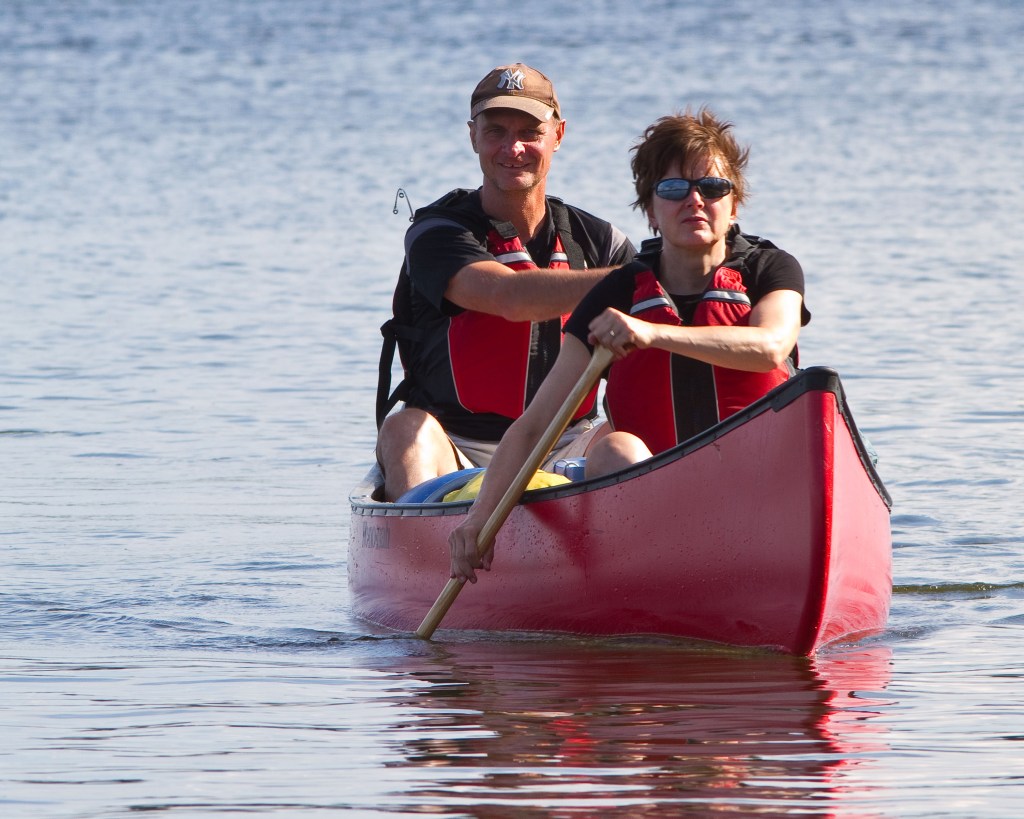
The trip included Michelle and me and our son Joel, as well as Dave and Leslie’s two sons, Ian, and Eric, and two other couples: Scott and Chantel, and Mary Pat and Paul, who brought along their three children. Of course, Holly, Dave and Leslie’s dog, also came along. The trip involved paddling over 55 km on lakes that are part of the Churchill River, starting at Lynx Lake and ending at the village of Missinipe on Otter Lake.
Our daily routine involved waking up and eating breakfast and then breaking camp and canoeing for a few hours in the morning before pausing for lunch. After lunch, we would canoe until the late afternoon before stopping at a suitable island to make camp. We always camped on islands because they were scenic and offered protection from black bears. Once our canoes were unloaded and our camp set up, we would have dinner before relaxing in the evening.
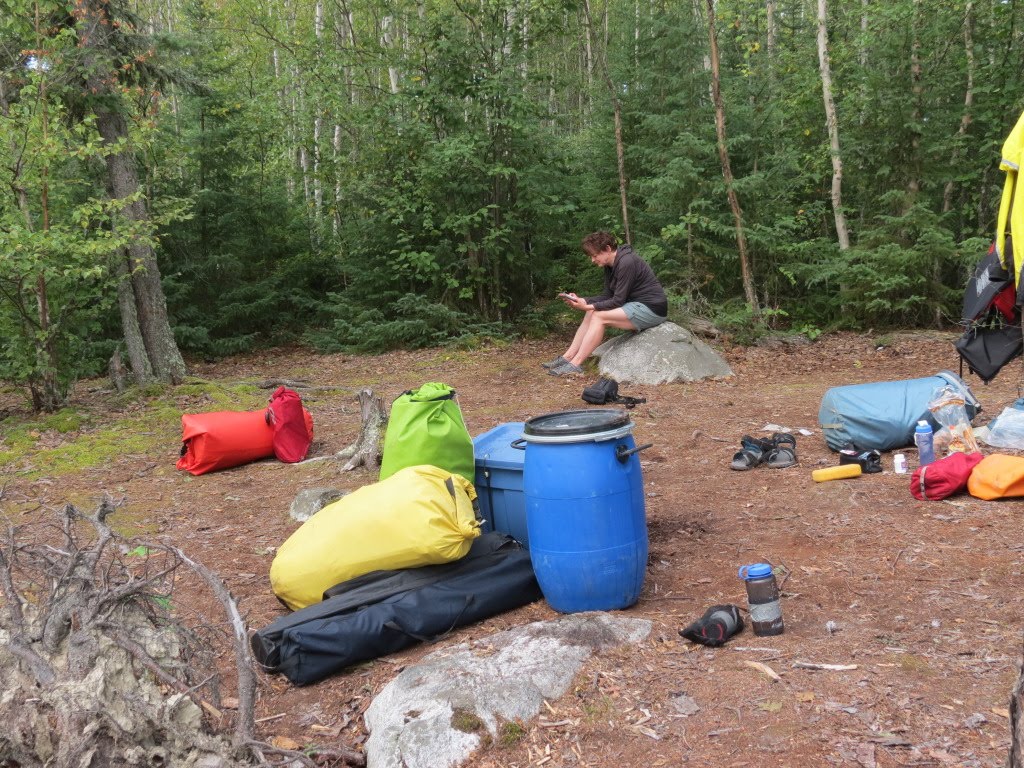
The trip did not start off well. It rained all morning and early afternoon, making everything wet, and us miserable. I do not enjoy camping in the rain and have often packed everything up and gone home when the weather turns unpleasant. On this camping trip, we had no choice but to endure the rain. Fortunately, the next three days were bright and sunny, which improved our moods and made the trip pleasurable.

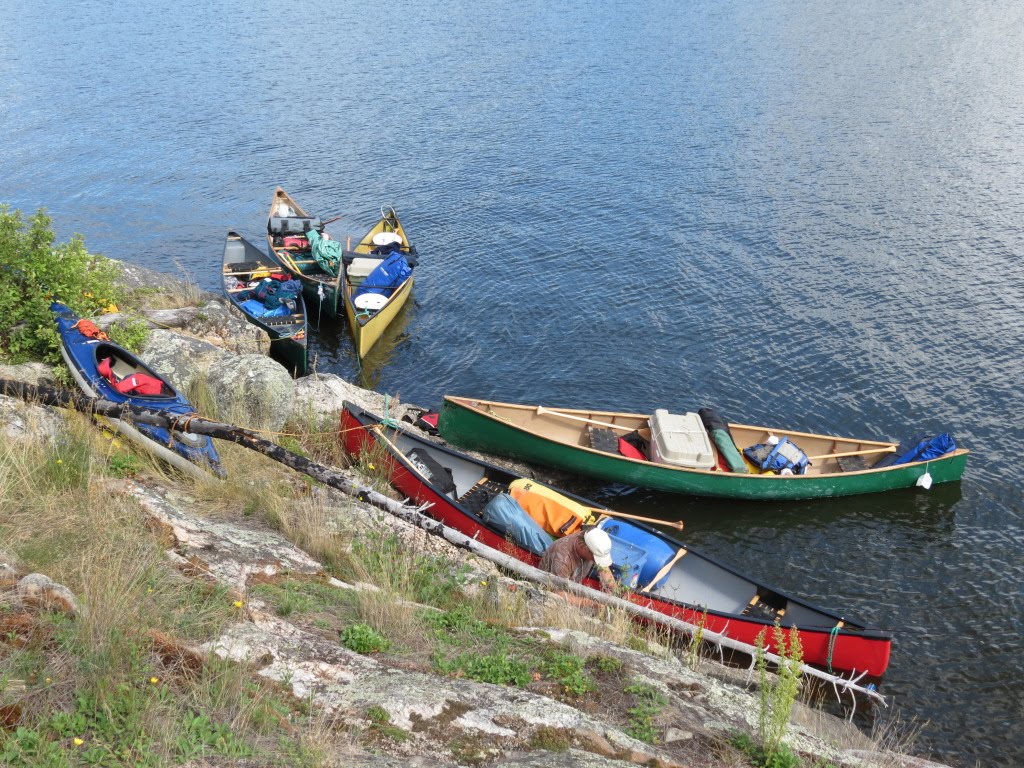
The trip included several portages because beaver dams, rapids, and waterfalls made the creeks and narrows between the lakes impassable. If we were lucky, we could simply drag our canoe over a beaver dam or get out and guide it through some small rapids. The most difficult portages occurred when we encountered a waterfall or large rapids and had to unload the canoe and carry everything around the obstacle. Some portages were short, while others were over a kilometre. To reduce the number of trips, everyone carried as much gear as possible. There were also wasps to contend with, as several of us got stung as we carried supplies and equipment along the path.
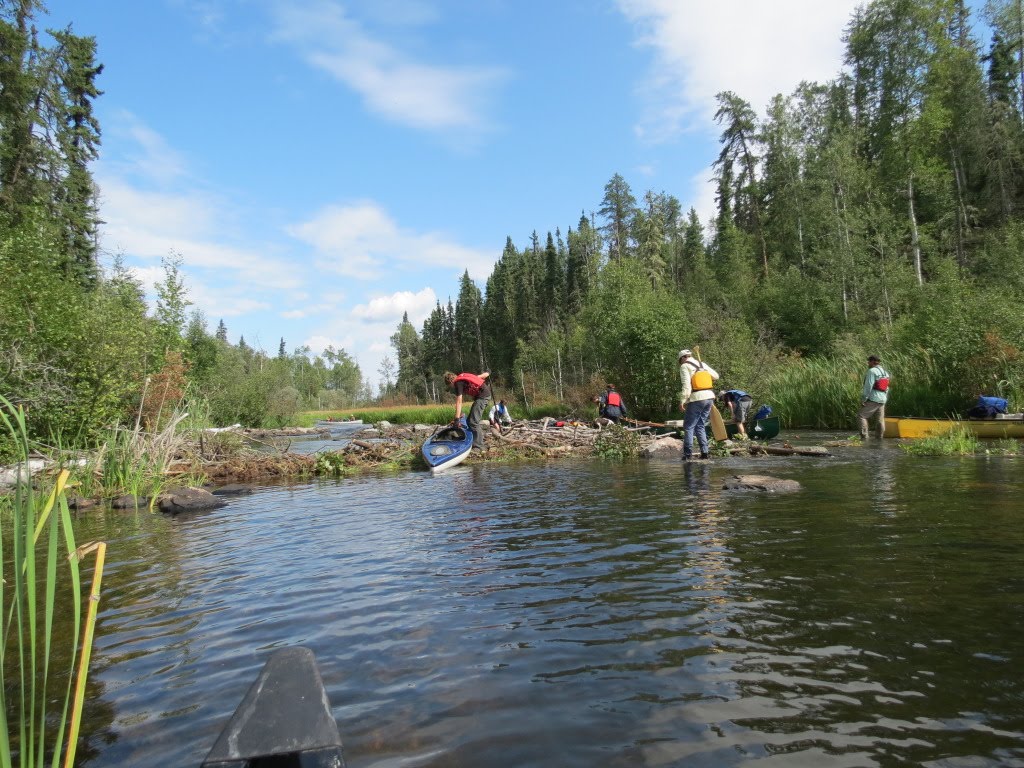
The worst portaging day was the second. I lost count of how many portages we did that day; no sooner had we started canoeing after a portage, that we had another portage. Everyone was exhausted that day and relieved to stop after we found a suitable campsite. Scott said it was the second worst day of his life.
The most unforgettable portage was around some rapids that had fast-flowing water and large rocks protruding from the water. The rapids were about 100 m long and 25 m wide. Joel and Ian had completed the portage and Michelle and I were next and watched them leave. The water that flowed towards the rapids appeared calm but actually was rushing fast. Ian and Joel launched their canoe and started traveling in the front of the rapids instead of heading straight to avoid the fast-flowing water. Soon after they launched, they realized they were traveling in the wrong direction and started paddling as quickly as they could to avoid being swept back down to Sim Lake. Michelle and I watched in horror as their canoe capsized and the river swept them through the rapids and around the rocks and deposited them in the middle of the lake. Fortunately, no one got hurt, and there were some other canoeists on the lake who helped retrieve their canoe, paddles, and dry bags and bring them back to shore. Everything got soaked, but amazingly the only equipment they lost was their lawn chairs, which are now somewhere at the bottom of Sim Lake.
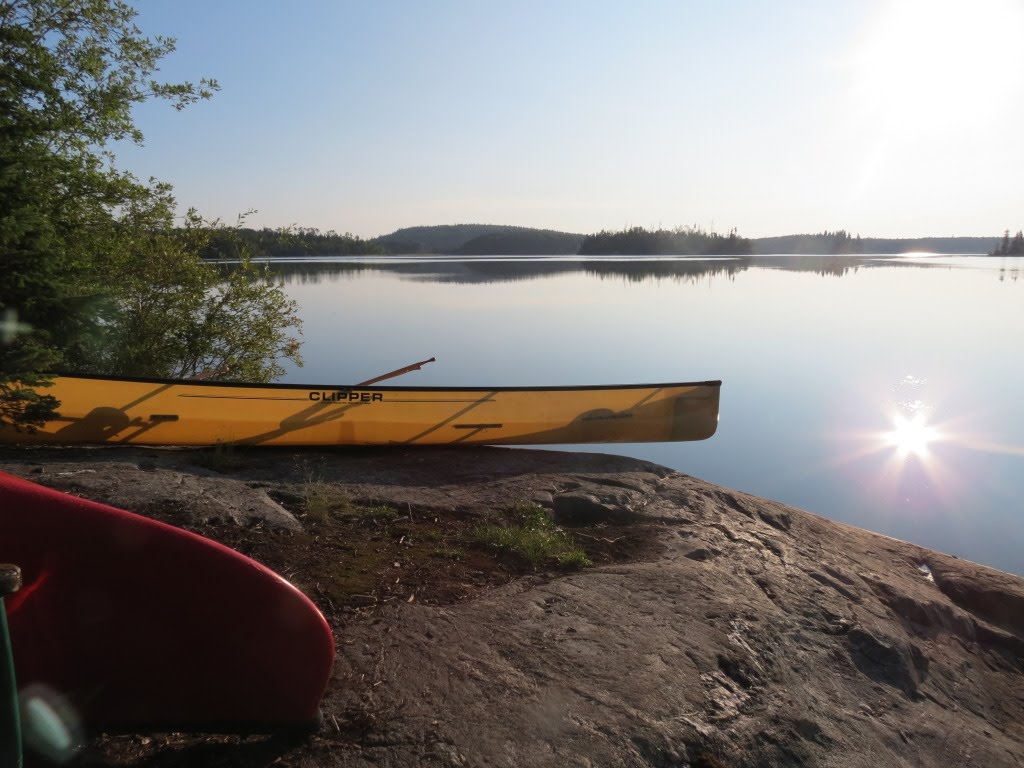
The benefit of portaging is that it leaves civilization behind, and you get to canoe on pristine lakes. It was a pleasure gliding across the water, absorbing the surrounding beauty of the Canadian Shield. Some mornings, the lakes were smooth as glass and reflected the sky and the trees along the shore of the lake. Only twice during the four days did we meet another group, and often the only sound was the rhythmic splashing of our paddles.
The Churchill River was an important river to Indigenous nations thousands of years before the first Europeans arrived. The Cree name for the Churchill River is Missinipe meaning “big water.” We were able to see some of the rock paintings along the route.
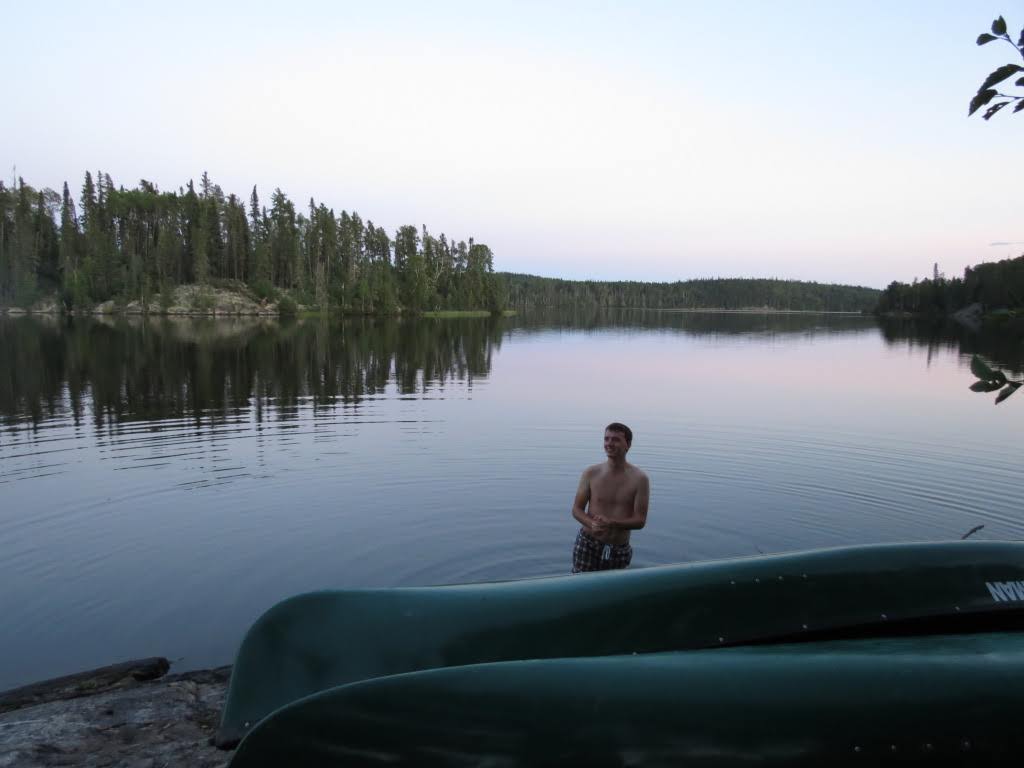
After a long day of canoeing, it was nice to relax. I liked to swim or fish, while Michelle liked to swing in the hammock and read. Later, everyone would sit around the campfire and talk. Ian brought along a Stuart McLean book and would entertain us by reading a few stories. We also had snacks and beverages and played campfire games. Later, we would go to bed and fall asleep listening to the haunting call of loons and the waves gently lapping against the shore. Canoeing, Stuart McLean, and loons: it cannot get any more Canadian.
One evening, however, was not peaceful. It was past midnight, and the sound of thunder and the wind blowing through the trees woke me up. I realized there must be a thunderstorm rolling in, but I was not concerned because I was confident our tent would keep Michelle and me dry. Michelle was awake as well, and I told her we have a good tent, and I attempted to go back to sleep. However, I noticed the wind was getting stronger, and the tent is now being lit up by the light strikes. I can also hear the first raindrops hitting the tent. The storm is heading directly towards us, and soon we are in an intense thunderstorm. The lightning strikes are so close I could hear the crack of thunder at the same time I saw the tent being lit up. The sounds of thunder, the wind blowing, and the downpour of rain are deafening; I had to yell for Michelle to hear me. I could hear the wind blowing over trees and feared one landing on the tent. I was also worried about getting hit by lightning and having our tent being ripped apart. I heard Dave yelling to find out how our sons were doing in their tent, and them yelling back that they were okay. Later, I found out Dave had one hand outside his tent holding onto the pole to make sure his tent was not blown over. The storm comes in waves, so it was a sleepless night. Amazingly, everyone survived and emerged from their tents (mostly) dry the next morning.
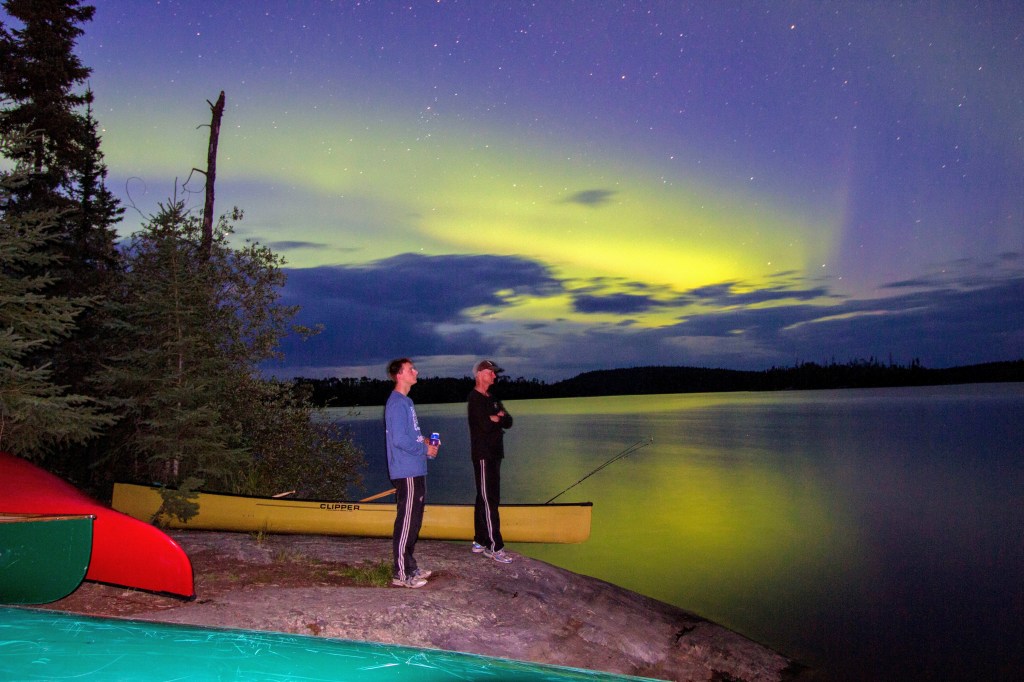
On a much better evening, the northern lights were spectacular. I cannot ever recall seeing such a display as I did that night. They lit up the entire sky as the aurora changed colors and swirled towards the earth. Joel and I stood beside the lake and watched and could even see the lights being reflected off the lake. It was mesmerizing.
Michelle and I have now done at least one trip every summer since our trip to Northern Saskatchewan. Some other trips include paddling down the North Saskatchewan River and Red Deer River. We also like to go to Lake Land Provincial Park and canoe a system of lakes there. We canoed the Churchill River a second time and would like to return someday, and Dave and Leslie also want to take us to Quetico Provincial Park in Northwestern Ontario. Regardless of where we decide to go next, or how difficult the trip, it is nice to escape the city and enjoy the beauty and solitude of the Canadian wilderness.

 One Last Kick
One thought on “Our First Canoe Adventure”